

Lake Kerkini National Park, History, part 2


The area was already known since the beginning of the 20th century for its great ornithological value. F.N. Chase, who served in the British Expeditionary Force in the Strymon Plain during the years 1916-1917, and later published his ornithological observations, wrote that “..the Strymon Plain remains tera incognitta (unknown land) to the ornithologist..” and of “truly enormous winter flocks of terns which sometimes covered tens of acres..” and that “..large birds of prey abound throughout the plain..” According to Chasen, eagles “..were among the most characteristic birds of the Strymon Plain, especially in winter.
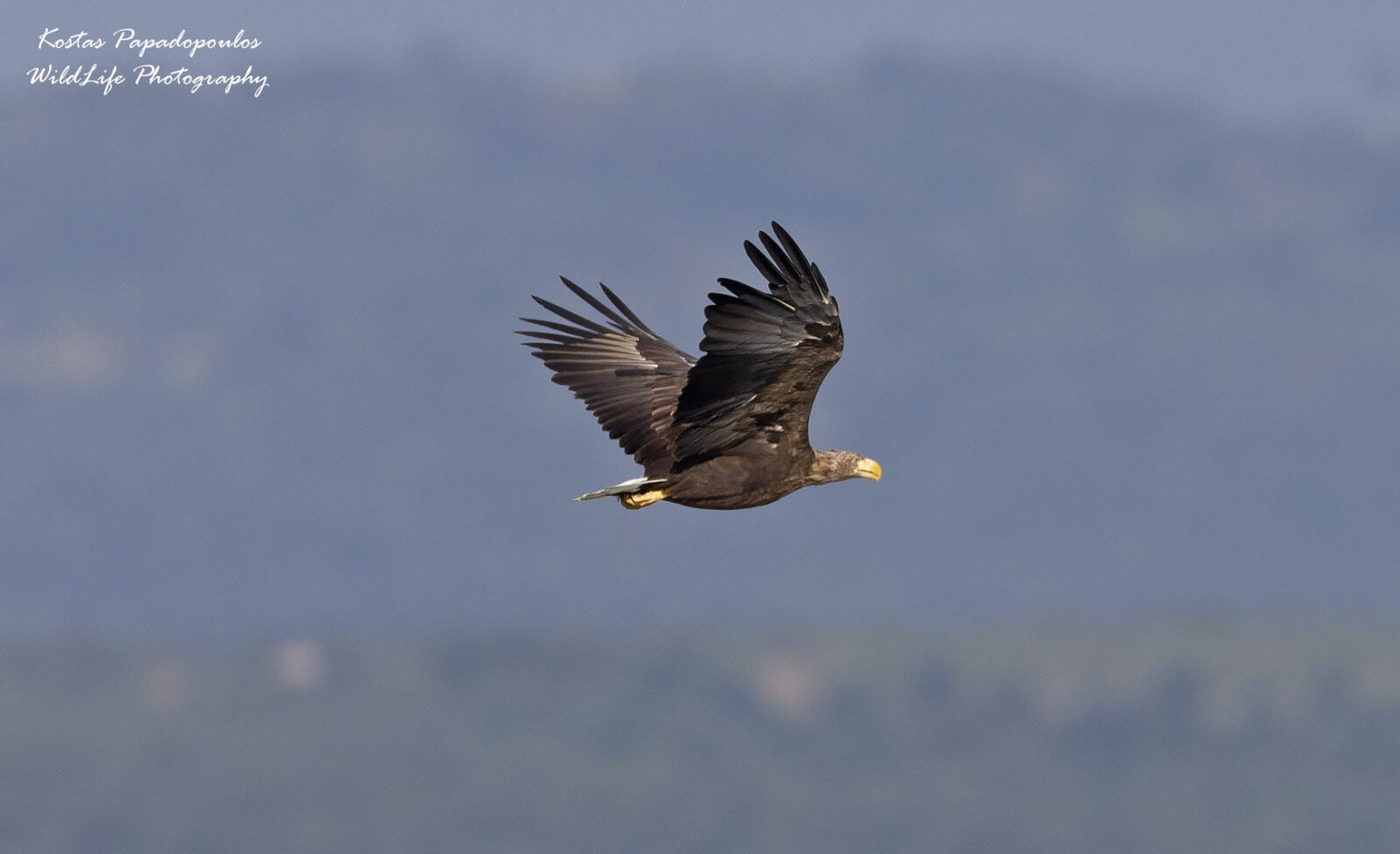
It was not uncommon to see on every wood or on every bare tree as far as the eye could see, eagles with their plumage inflated and their heads turned towards the river, watching the ducks flying restlessly up and down…” Especially the golden eagles “..were the most numerous, they were permanent residents of the area…”, the spotted eagles were “..a common sight in the plain…” while “..many of the eagles I saw were white-tailed eagles. In the great cold of January 1917, very many white-tailed eagles were gathered on the banks of the Butkova River…” Along with four species of vultures, Chasen mentions other raptors as quite common, such as the osprey and the kestrel, species that are now almost extinct and are found only in a few places throughout the country.
Another British military officer, Captain A. Sladen, refers to large flocks of terns that he encountered in the area in winter and to thousands of black terns nesting in the lakes of the area. He also says that bullfinches “..were quite common and their peculiar mooing could be heard almost in the reeds…”.
The relatively shallow depth, the gentle slopes in the northern and northeastern part of the lake, the high productivity due to periodic flooding with water and its enrichment with nutrients, its position in relation to the migration corridors of birds and the existence since ancient times in the same place of a large wetland area, are the factors that contributed to the preservation of the rational wealth of the area even after the creation of the artificial lake.
In the late 70s to the early 80s, the water-loving vegetation covered more than 12,000 acres in various places in the lake, while the riverside forest dominated its northern part. The area of the lake was approximately 50,000 acres in spring, while in winter it often disappeared and only the riverbed that crossed the lake area remained. The annual variation in water level was about 3 meters (higher in spring, lower in autumn and winter).
The new works in the lake area were completed in 1982 when the new dam began operating. With the operation of the new dam, there is a seasonal fluctuation in the lake level by 4.5 to 5 meters (from an altitude of 31.0 – 31.50 in autumn, to approximately 36 meters in spring), resulting in the lake surface varying from approximately 50,000 acres in winter to 75,000 acres in spring.
Did you know that:
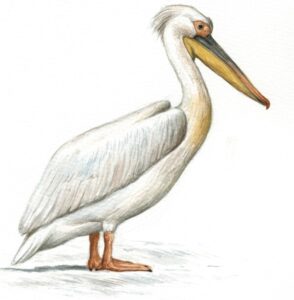 More than 3,000 Rhododendron pelicans
can be observed during spring migration
and approximately 5,000 on their autumn return to Africa.