

Lake Kerkini National Park, History, part 4

 Biodiversity in Lake Kerkini National Park
1,300+ plant species
4,700+ invertebrate species
400-500 moth species
128 butterfly species
78 orthoptera species
40 dragonfly species
315+ bird species
33 fish species
27 reptile species
58+ mammal species
11 amphibian species
46+ new species to science (insects)
6548 total number of taxa
In addition, an unexplored variety of other invertebrates.
Fauna
More than 315 bird species have been observed in the National Park. Of these, 137 species nest, 134 species winter and 163 species use the wetland and the wider area as a stopover and feeding site during their migratory journeys.
A total of 11 species nest in mixed colonies in the riparian forest, in significant numbers for Greece and Europe. These species are: the Cormorant (Phalacrocorax carbo), the Little Egret (Egretta garzetta), the Egret (occasionally) (Ardea Alba), the Purple Egret (Ardea purpurea), the Grey Heron (Ardea cinerea), the Little Egret (Ardeola ralloides), the Nightingale (Nycticorax nycticorax), the Eurasian Platypus (Platalea leucorodia), the Pygmy Cormorant (Phalacrocorax pygmaeus), the Pygmy Cormorant (Plegadis falcinellus).
In floating nests, in the riverside forest and in the remaining reed beds, the Crested Grebe (Podiceps cristatus), the Dwarf Grebe (Tachybaptus ruficollis), the Black Grebe (Podiceps nigricollis), the Coot (Fulica atra), and the Moorhen (Gallimula chloropus) nest and since 2009 occasionally the Swan (Cygnus olor) while the Moustached Tern (Clidonias hybridus) and the Black Tern (Chlidonias niger) nest in the leaves of the water lilies and other aquatic plants.
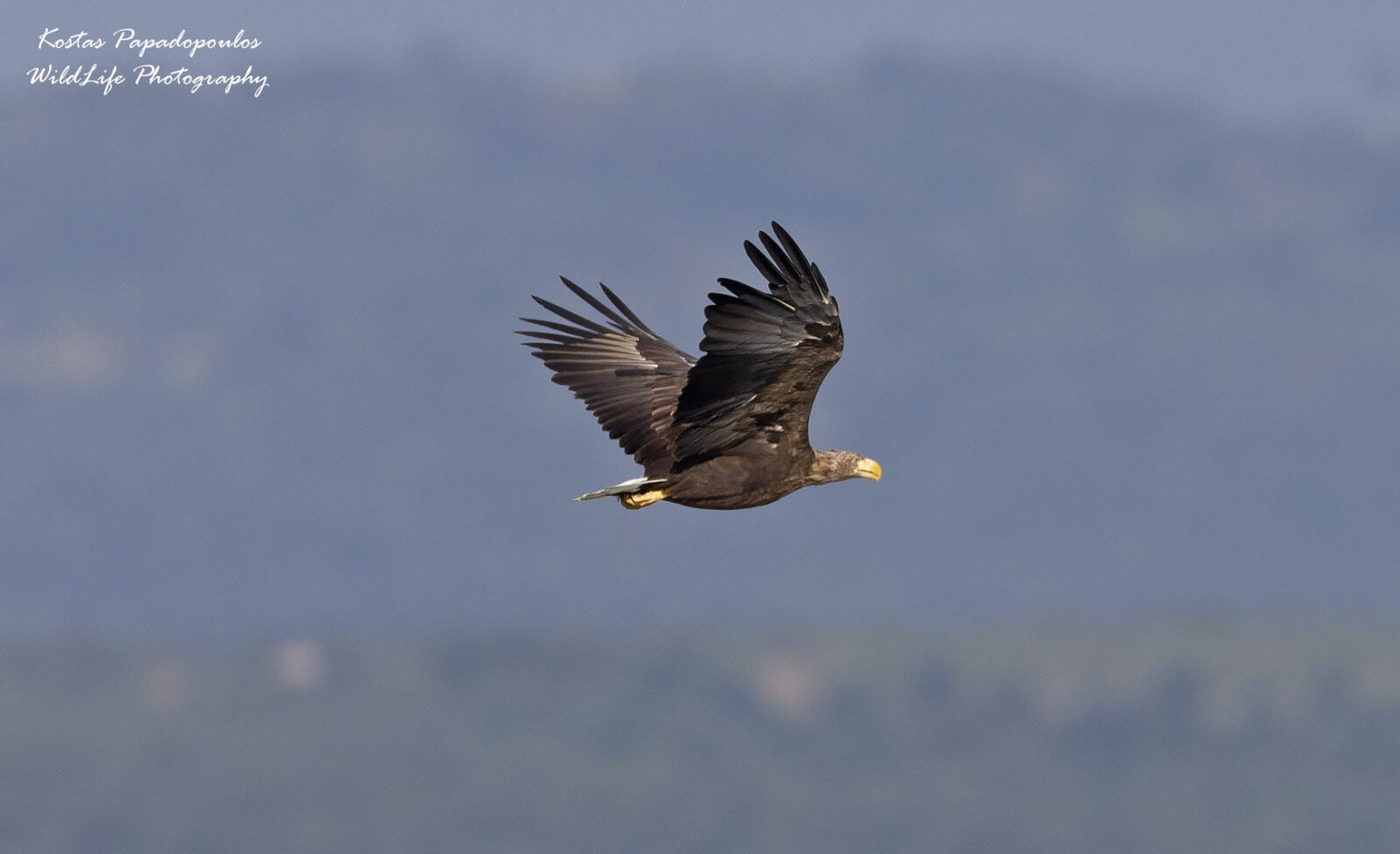
The Silver Pelican has also been breeding since 2003 in significant numbers on an artificial island and a wooden platform. Other important species that breed in the area are the White Stork (Ciconia ciconia), the Black Stork (Ciconia nigra), the Peregrine Falcon (Falco peregrinus), the Lesser Spotted Eagle (Circaaetus gallicus), the Lesser Spotted Eagle (Aquila pomarina), the White-tailed Eagle (Haliaeetus albicilla) and the Lesser Spotted Eagle (Aquila pennata).
Many thousands of water birds winter in the lake. Also noteworthy is the presence of many rare birds of prey, such as the Imperial Eagle (Aquila heliacal), the Golden Eagle (Aquila chrysaetos), the Peregrine Falcon (Falco peregrinus), the Spotted Eagle (Aquila clanga), the White-tailed Eagle (Haliaeetus albicilla).
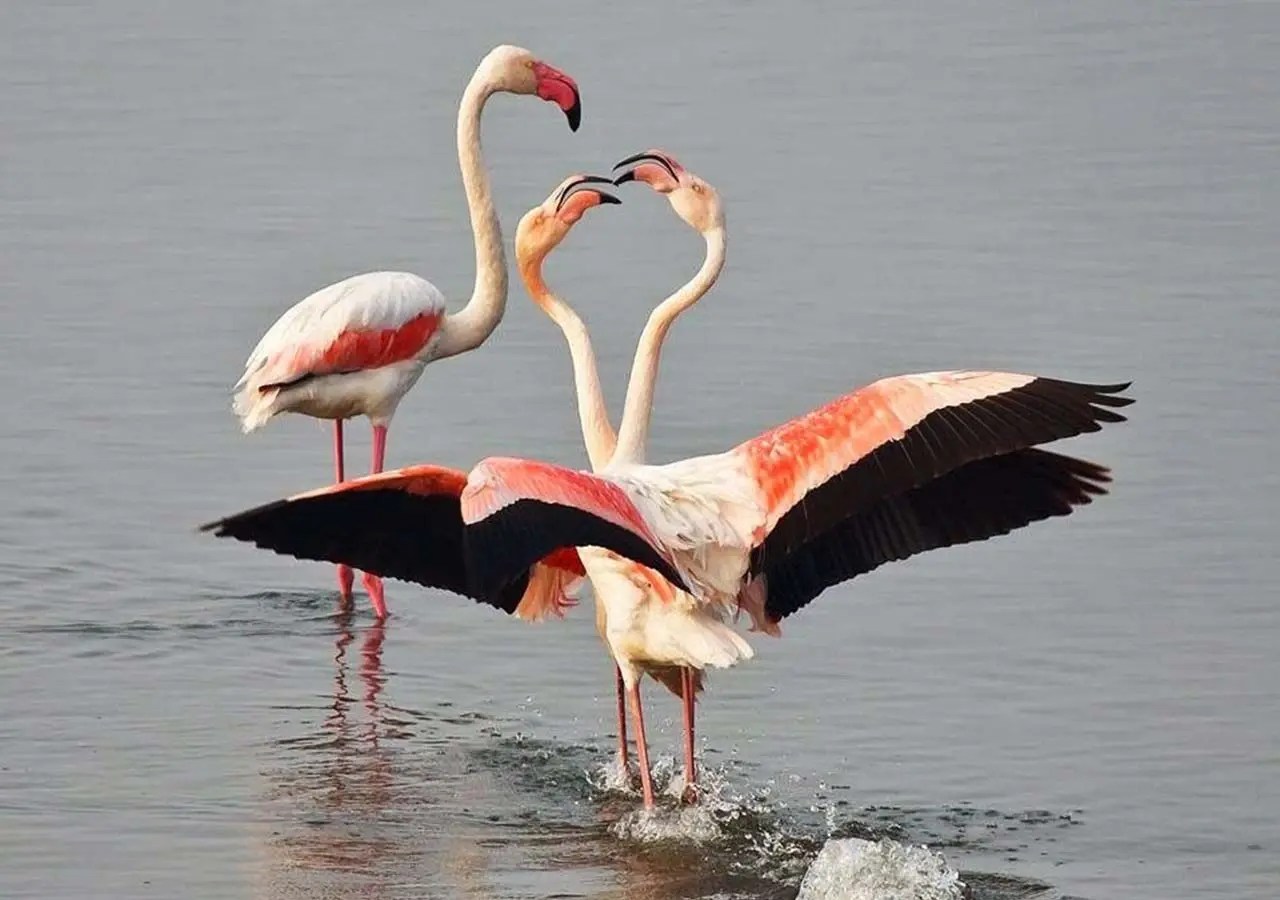
Other species observed during migration or in winter are the Common Eagle (Oxyura leucocephala), the Common Peregrine (Falco cherrug), the Flamingo (Phoenicopterus roseus), the Mute Swan (Cygnus colombianus), the Merganser (Mergus merganser), the Little Goose (Anser erythropus) etc. Lake Kerkini (together with the Porto Lagos area) is the most important wintering area for the Great White Pelican (Pelecanus crispus) in Europe.
Mammals are also represented by many species. The Otter (Lutra lutra) is found in the lake, canals and ditches. The Fox (Vulpes vulpes), the Wildcat (Felis sylvestris), the Weasel (Mustela nivalis), the Polecat (Mustela putorius), the Marten (Martes foina) are found in the wetland area and the mountains surrounding it. The Wolf (Canis lupus) is found at certain times of the year in the wetland, while most of the year is in the surrounding mountains where there are also Wild Boars (Sus scrofa) and Roe Deer (Capreolus capreolus) while Jackals (Canis aureus) are found almost everywhere around the perimeter of the lake where there is an abundance of food.
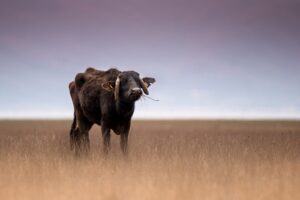
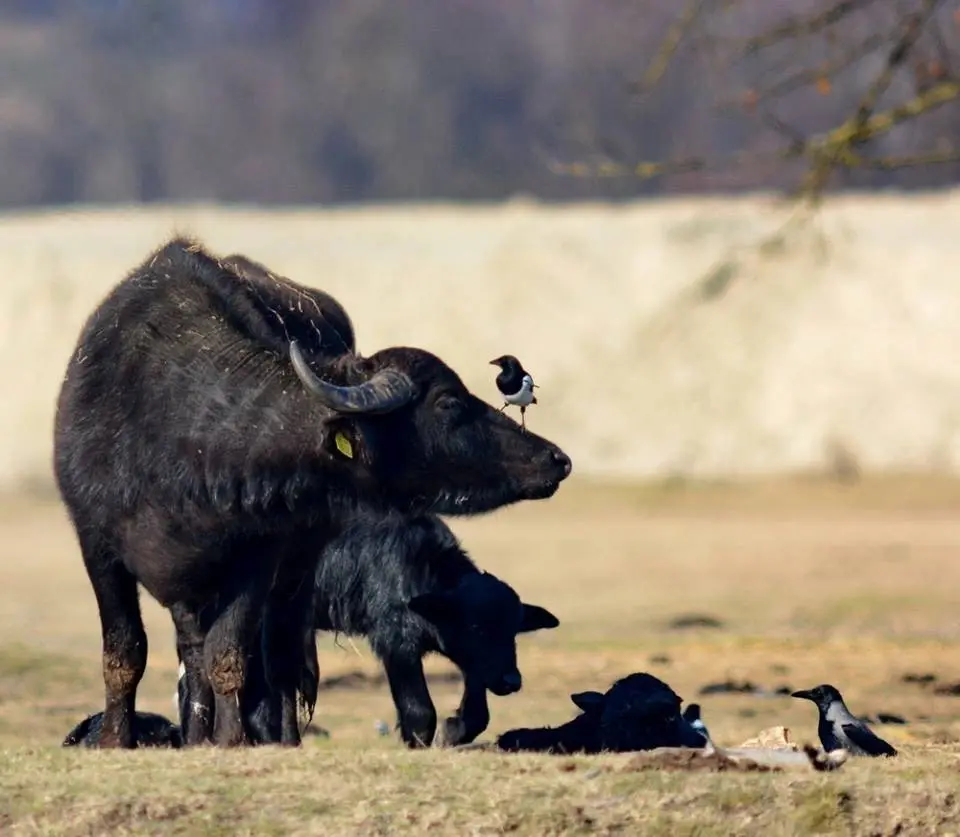
Finally, the area has the largest number of Buffalo in Greece, which is protected by the Greek state.
Buffaloes used to be present in most of the wetlands of Macedonia, Thrace and Thessaly, but in the last 50 years they have been limited to very few areas.
Did you know that:
At least 5,000 Buffaloes graze
in the Kerkini region.