

Golden Eagle (Aquila chrysaetos)
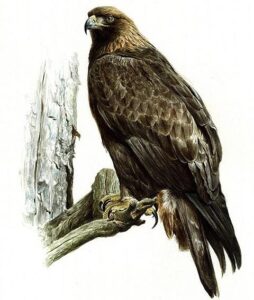
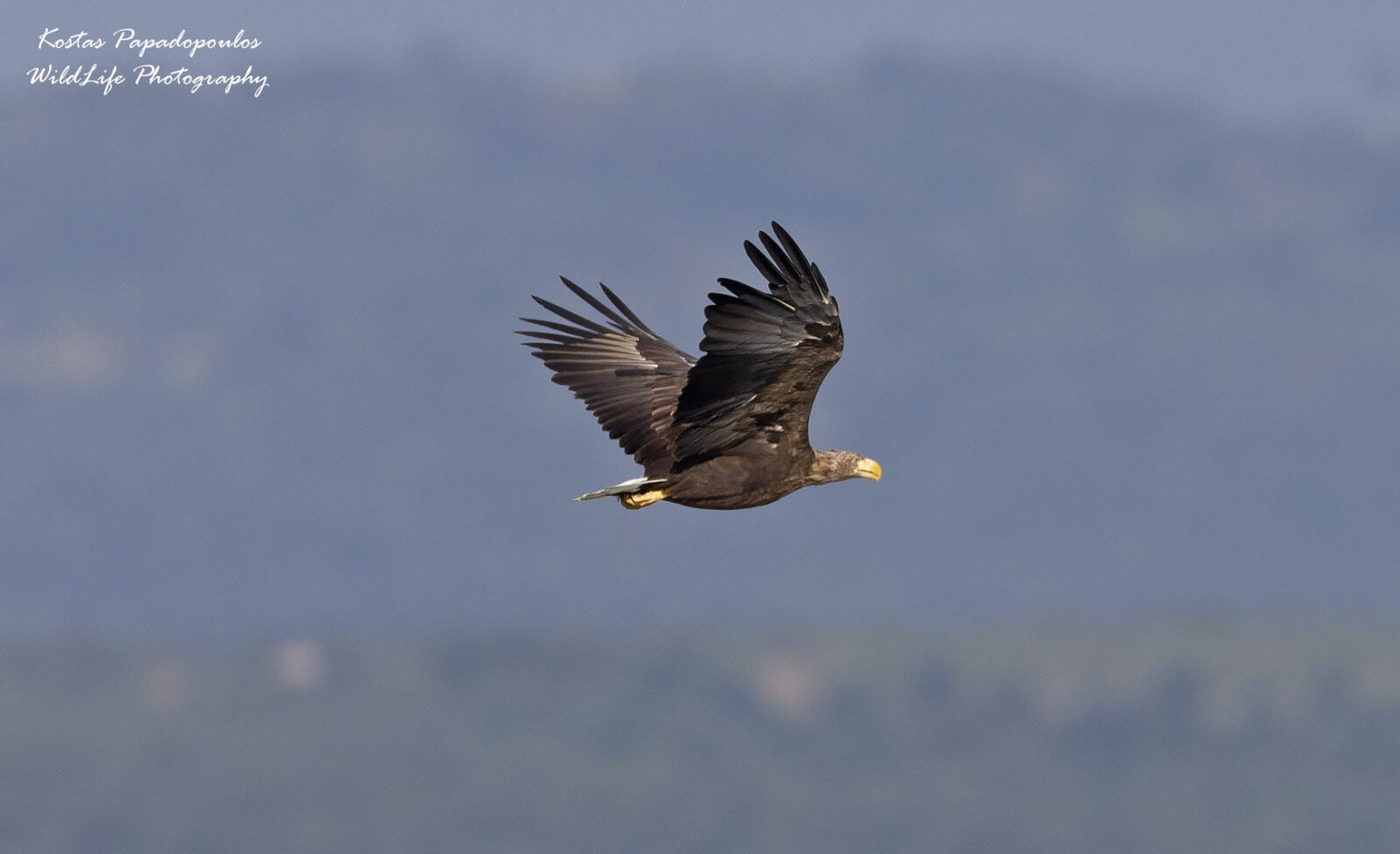
The Golden Eagle, also known in Greek tradition -where it holds a special place as a symbol of bravery and heroism- as the Stavraitos, belongs to the Accipitridae family. In classical antiquity it was depicted as a symbol and messenger of Zeus, while its habit of throwing turtles from above to break their shells is also known (Aeschylus is said to have been killed by a turtle thrown by an eagle).
Its distribution includes six subspecies and is spread across the northern hemisphere with the most isolated populations being found in central Africa. In Greece, it spreads throughout the mainland, to some of the Ionian Islands and Crete, while it has disappeared from the Aegean islands, where it was found in the previous century.
A large predator, with a wingspan exceeding 2.3 m, it is found in mountainous and semi-mountainous areas. It uses steep places on rocks to make its nest (sometimes large trees with open crowns), away from intense human presence. It searches for its food in open ridges with mosaics of forests, shrublands and meadows. It feeds in mainland Greece, mainly on turtles during the breeding season, and supplements its diet with small carnivores, birds and dead animals.
Each pair successfully raises, on average, one chick every two years. Young Golden Eagles spend the first years of their lives nomadically, until they integrate into the breeding population, at which point they settle permanently in a territory, mated for life, which in nature can exceed 30 years. They defend their territory, which usually exceeds 100 sq. km, from other individuals of the same species.
Although the species is protected by national and EU legislation, its populations are declining, especially in Northern and Central Greece, and it is considered Endangered (EN) at the national level. It is threatened by poisoned baits, electrocution and poaching, as well as the disturbance and degradation of its habitats by human activities (e.g. ASPEI which also carry a potential risk of death by impact). The abandonment of grasslands and the ever-increasing number of fires negatively affect the food available to the species.